
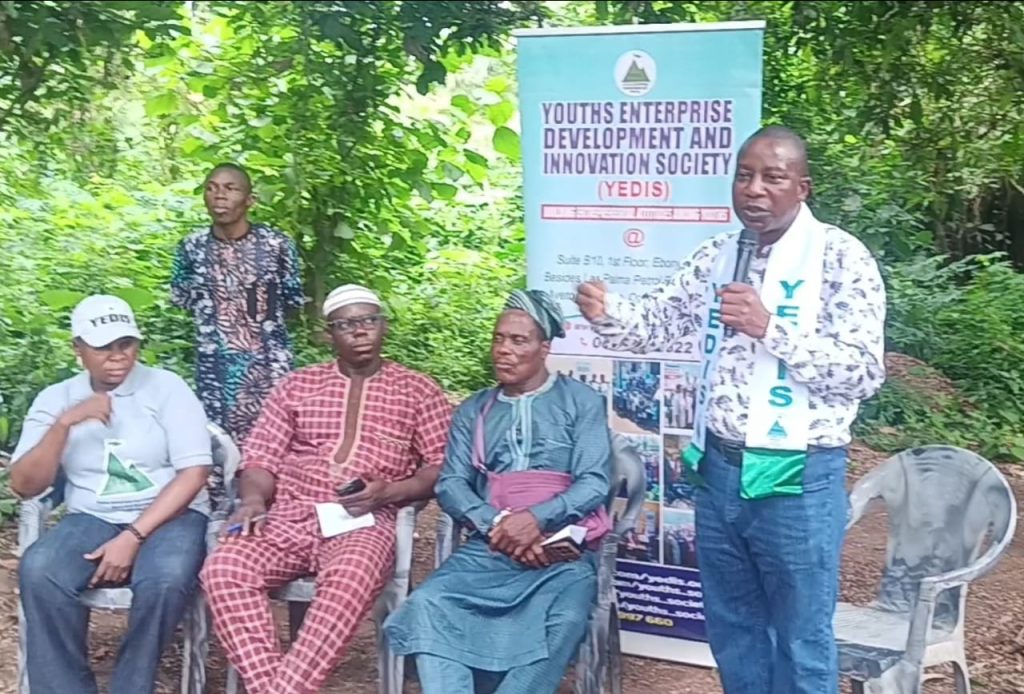
Digital inclusion is essential for climate-smart agriculture.
During the Youths Enterprise Development and Innovation Society (YEDIS) empowerment programme for rural women and girls involved in palm oil production in Itiya Ijesa, Obokun Local Government Area of Osun State on 5 June 2026, Mr. Rafiu Akinpelu Olaore elucidated how grassroots communities can employ AI tools (such as Gemini, ChatGPT, Copilot, and Google) to forecast weather, plan agricultural seasons, access markets, and eliminate guesswork from production processes.
By enabling youth to operate these digital tools within local cooperatives, we can bridge the technological divide, enhance palm oil and agricultural productivity, and foster enduring climate resilience.
Having coordinated an official session at the World Bank Group Civil Society Policy Forum during the 2026 Spring Meetings in Washington, D.C., where Mr. Olaore emphasized the theme, “How Artificial Intelligence and Digital Agriculture Create Jobs in Developing Countries,” the ongoing YEDIS empowerment initiative exemplifies how international policy discourse can be converted into practical grassroots actions.
True digital inclusion is not about complex programming; it is about putting practical, data-driven knowledge into the hands of the people who feed our communities. By bridging the generational gap and involving educated youth in digital management, we can build a highly resilient, climate-smart grassroots economy.
Key Takeaways:
Climate Resilience: Using AI assistants to predict weather patterns and schedule agricultural cycles accurately.
Youth Engagement: Training the next generation to manage digital tools for community cooperative growth.
Grassroots Innovation: Transforming traditional processing with data-driven, practical knowledge.