
YEDIS Founder Highlights AI and Digital Entrepreneurship as Drivers of Inclusive Economic Development at Alumni UK Lagos Thought Leader Series
Rafiu Akinpelu Olaore Advocates Practical AI Skills, Digital Entrepreneurship and Intergenerational Digital Inclusion | 13 November 2026
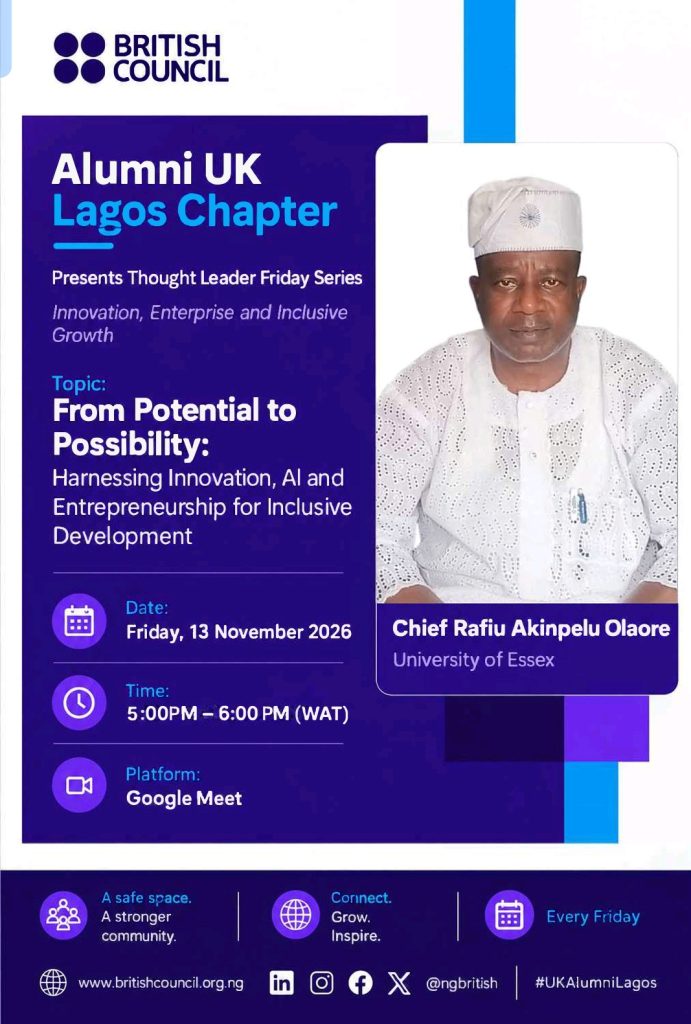
The Founder and Executive Director of the Youths Enterprise Development and Innovation Society (YEDIS), Chief Rafiu Akinpelu Olaore, has emphasized the importance of artificial intelligence (AI), digital skills and entrepreneurship in creating economic opportunities and promoting inclusive development, particularly among young people, women and underserved communities.
He made this submission while delivering a keynote presentation at the British Council Alumni UK Lagos Chapter Thought Leader Friday Series on Friday, 13 November 2026. The virtual session, held from 5:00 p.m. to 6:00 p.m. West Africa Time via Google Meet, was themed “From Potential to Possibility: Harnessing Innovation, Artificial Intelligence and Digital Entrepreneurship for Inclusive Development.”
The session attracted participants interested in entrepreneurship, innovation, technology and personal economic development, with 27 participants remaining throughout the presentation.
Turning Potential into Economic Opportunities
In his presentation, Olaore explained that artificial intelligence and digital technologies are transforming how people learn, work, communicate, produce goods and services, and conduct business. He encouraged participants to move beyond simply observing technological developments and begin acquiring practical skills that can help them create value, solve problems and generate sustainable income.
He noted that AI tools can serve as everyday productivity assistants, supporting individuals and small businesses with research, content development, business planning, customer engagement, market research and other routine activities.
However, he emphasized that technology alone does not guarantee economic success. Individuals must combine digital capabilities with creativity, critical thinking, problem-solving, discipline and an understanding of market needs.
His central message to participants was:
“Do not just watch the AI revolution. Learn to create value with it.”
Digital Entrepreneurship: Lessons from YEDIS Experience
Drawing on his experience in entrepreneurship development and community-based interventions, Olaore presented practical examples of how digital skills can be applied to improve livelihoods and expand business opportunities.
He recalled that in 2021, YEDIS organized a capacity-building programme that trained 150 fashion designers in digital fashion designing. The programme was designed to help the designers showcase their creative work to potential customers globally, use social media for professional networking and develop digital descriptions of their fashion styles and designs.
The initiative illustrated how traditional vocational skills can be strengthened through digital knowledge, enabling practitioners to improve their visibility, communicate their products and connect with wider markets.
He also shared the experience of establishing YEDIS, explaining that before launching the organization, he developed a five-year action plan outlining its intended activities and objectives. According to him, the organization accomplished all the activities planned within the specified five-year period.
He used this experience to demonstrate the importance of strategic planning, clear objectives, consistent implementation and the ability to translate ideas into practical results.
These examples reinforced his argument that digital entrepreneurship and innovation should not be treated as abstract concepts. They should be applied to existing skills, businesses and community challenges to create tangible opportunities.

Bridging the Digital Divide Through Intergenerational Digital Support
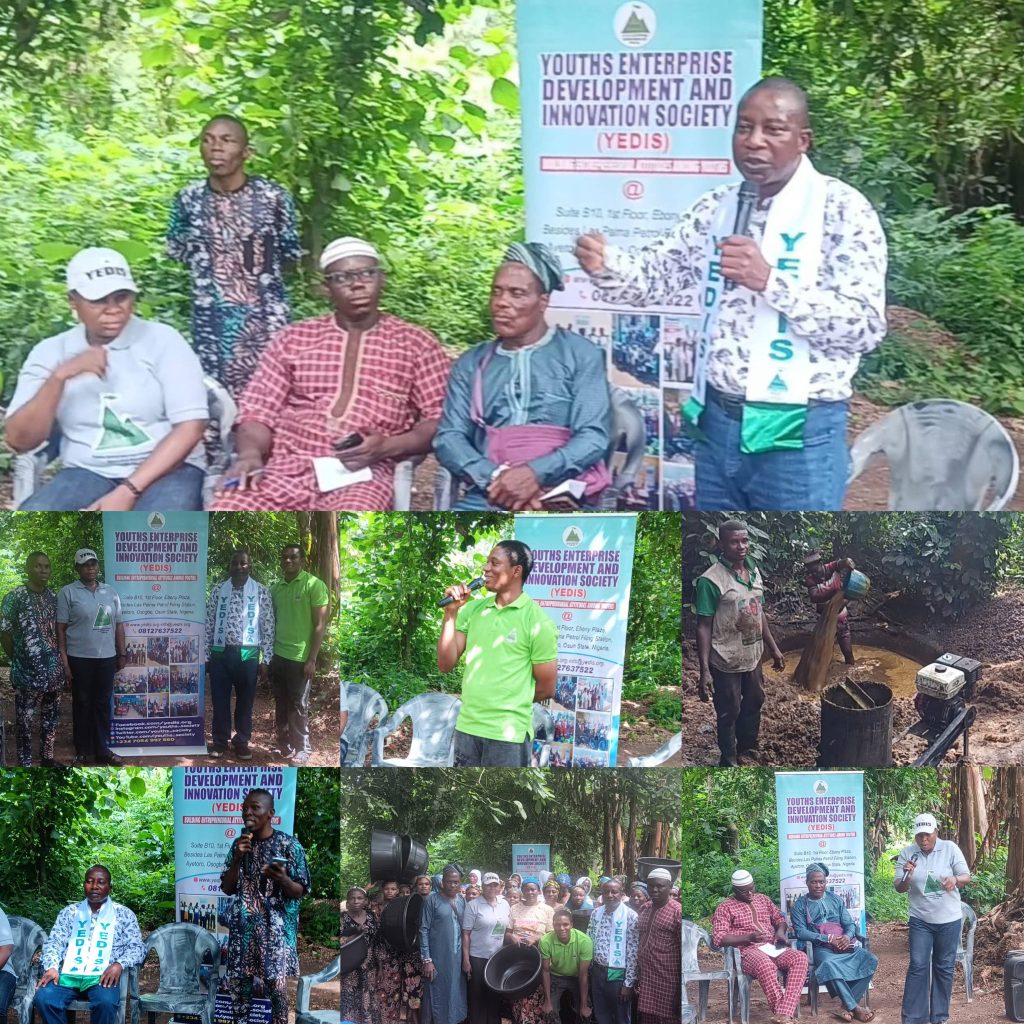
A particularly practical aspect of the presentation drew from YEDIS’s 2026 empowerment activities for women and young people involved in palm oil production.
Olaore explained that, during the programme, he advised participating agribusiness traders to consider engaging a digitally skilled young person, or one of their children with relevant digital and AI skills, to support their business operations.
The young person could serve as a digital information support resource, helping the trader obtain relevant information on market access and opportunities, weather conditions, government policies and programmes, customer information, and business networking opportunities through digital technologies.
He explained that many rural women and small-scale agribusiness operators possess valuable production and trading experience but may have limited access to digital tools, information channels and the skills required to use them effectively.
By connecting the business experience of women traders with the digital capabilities of younger people, this approach could help bridge the digital divide, improve access to timely business information, strengthen market connections and support better-informed business decisions.
The recommendation also presents an opportunity for young people to apply their digital and AI skills in practical ways while contributing to the economic activities of their families and communities.
This approach reflects YEDIS’s broader commitment to connecting grassroots communities with digital knowledge, entrepreneurship opportunities and inclusive innovation.
Responsible and Productive Use of Artificial Intelligence
The presentation also addressed the importance of responsible AI adoption. Olaore encouraged participants to use AI tools thoughtfully and to maintain human judgment when relying on AI-generated information.
He highlighted the need to verify facts, figures and calculations before using AI-generated outputs, protect confidential information relating to customers, employees, employers and businesses, and respect copyright and data protection requirements.
He emphasized that AI should support human decision-making rather than replace accountability, professional judgment or ethical responsibility.
A Practical 30-Day Action Plan
To encourage participants to translate the presentation into action, Olaore discussed a practical 30-day approach to developing digital and entrepreneurial capabilities.
He encouraged participants to identify a problem they could solve, select a relevant digital or AI tool, learn how to use it, apply the tool to a practical task and assess the value created.
He also urged participants to explore opportunities to provide digital services, support small businesses, develop online products, improve professional visibility and identify market needs that could become viable entrepreneurial opportunities.
He stressed that individuals do not necessarily need substantial financial resources to begin exploring digital entrepreneurship. They can start by identifying their existing skills, understanding the needs of potential customers and using accessible digital tools to improve the value they offer.
The Role of Alumni Networks in Inclusive Innovation
Olaore further highlighted the potential of alumni networks to promote knowledge exchange, mentorship, collaboration and entrepreneurship development.
He encouraged members of the Alumni UK Lagos Chapter to use their professional experiences, networks and expertise to support young entrepreneurs, promote digital skills development and create opportunities for collaboration.
He noted that alumni communities can contribute to inclusive economic development by connecting individuals with mentors, technical knowledge, business opportunities and partnerships.
From Presentation to Practical Action
The keynote reinforced the need to connect technological advancement with individual economic sustainability and community development.
Through examples from YEDIS programmes and organizational experience, Olaore demonstrated how digital skills can strengthen existing professions, how strategic planning can translate ideas into organizational achievements, and how intergenerational collaboration can help rural entrepreneurs overcome digital information barriers.
The presentation also reflected YEDIS’s ongoing work in youth empowerment, women’s economic inclusion, entrepreneurship development and digital innovation.
YEDIS believes that inclusive development requires more than access to technology. It requires the skills, knowledge, opportunities and supportive networks that enable individuals and communities to use technology productively.
The session concluded with a call for participants to take practical steps towards developing their digital capabilities, applying AI responsibly and using entrepreneurship to create value.
The full session recording is available on YouTube:
Watch the presentation:
About the Speaker
Chief Rafiu Akinpelu Olaore is the Founder and Executive Director of the Youths Enterprise Development and Innovation Society (YEDIS), a youth-focused nongovernmental organization with Special Consultative Status with the United Nations Economic and Social Council (UN ECOSOC).
He holds an MSc in Entrepreneurship and Innovation from the University of Essex, United Kingdom, an MBA and a BSc in Entrepreneurship and Business Management. He also received an honorary Doctor of Business Administration (DBA h.c.) from Crown University International.
His work focuses on entrepreneurship development, digital transformation, youth employment, women’s economic empowerment, inclusive innovation and sustainable community development.
Through YEDIS, he has championed initiatives that connect underserved communities with entrepreneurial knowledge, digital skills, technology and economic opportunities.
About YEDIS
The Youths Enterprise Development and Innovation Society (YEDIS) is a nongovernmental organization committed to promoting employment opportunities and sustainable community development through rural entrepreneurship and digital innovation.
Accredited with Special Consultative Status by the United Nations Economic and Social Council (UN ECOSOC) since 2025, YEDIS works across youth entrepreneurship, women’s economic empowerment, digital inclusion, AI skills development, agribusiness and climate action.
Through grassroots programmes, partnerships and international engagements, the organization seeks to ensure that young people, women and underserved communities can participate meaningfully in the opportunities created by innovation and the digital economy.
Youths Enterprise Development and Innovation Society (YEDIS)
Website: https://yedis.org