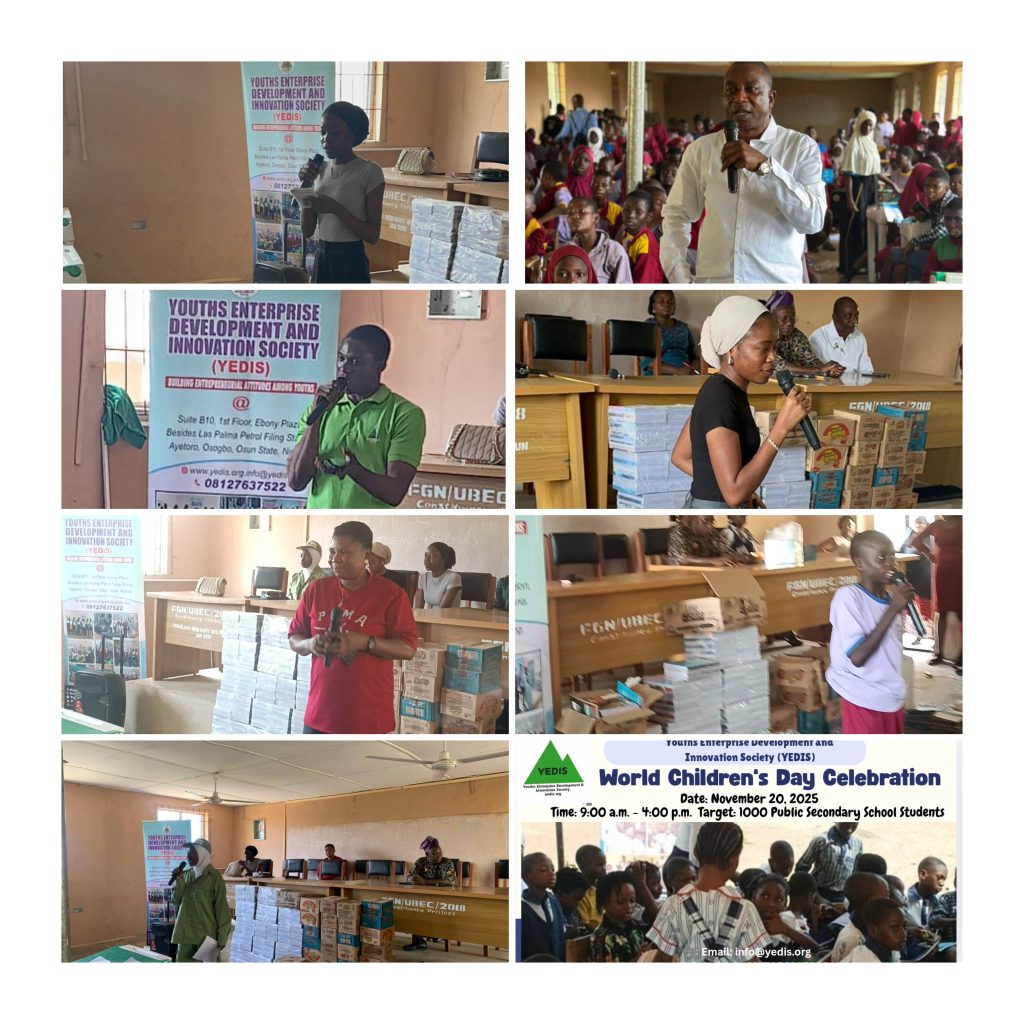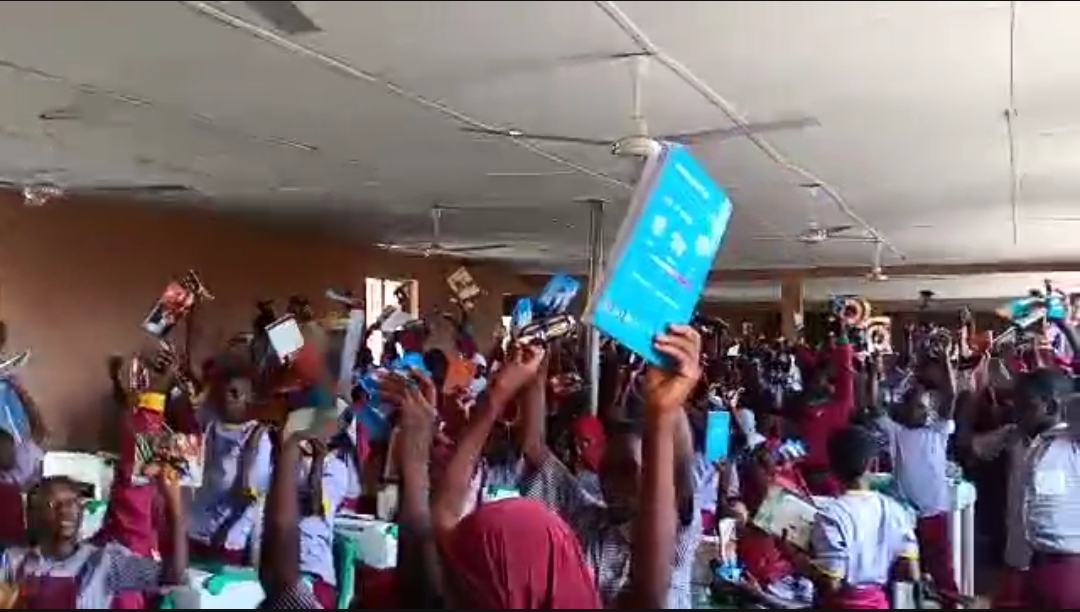
YEDIS commemorated UNICEF World Children’s Day 2025 by engaging with underprivileged children on Thursday, 20th November 2025, at Onaolapo Memorial High School, Ikirun, Osun State, Nigeria.
During the event, YEDIS provided education to nearly 1,000 students (ages 10-15) from the school on initiatives related to climate change, AI ethics, peace, entrepreneurship, quality education, and social justice, including interactive quizzes.
The YEDIS delegation was led by its Executive Director, Dr Rafiu Olaore, who delivered a speech on the significance of rural entrepreneurship and introduced the United Nations’ Sustainable Development Goals (SDGs). Facilitators from the YEDIS youth team addressed various contemporary issues, including Mr Waheed Opeyemi Adeoye (Digital Technology and AI), Miss Kabirah Olaore (Food Security and Climate Change), Miss Sekinah Sulaiman, a National Youth Service Corps officer of YEDIS (Health), Mrs Mary Adebayo (Environmental Sustainability and Waste Management), and Miss Alimah Olaore (Social Justice).
Participants were afforded opportunities to articulate their challenges and reflect on the impacts they have experienced.
At the conclusion of the program, YEDIS distributed biscuits, notebooks, and pens to all attendees, with support from Alhaja Sakirat Lawal, a member of the YEDIS Advisory Board.
The school management expressed their profound gratitude to the entire YEDIS team for their generous support of the school.
Additionally, YEDIS CEO appreciated Mr Ismaila Alimi, Principal of Onaolapo Memorial High School, Ikirun, and the entire staff for their hospitality and efficient coordination of the five-hour event, held from 10:00 a.m. to 3:00 p.m.
World Children’s Day signifies the UNICEF’s global day dedicated to action for children, by children, commemorating the adoption of the Convention on the Rights of the Child.
The 2025 theme is “My Day, My Rights.” UNICEF encourages global participation, urging stakeholders to listen attentively to children to understand better their daily experiences and the realisation of their rights, whether present, absent, or actively pursued, thereby fostering children’s right to participation.