
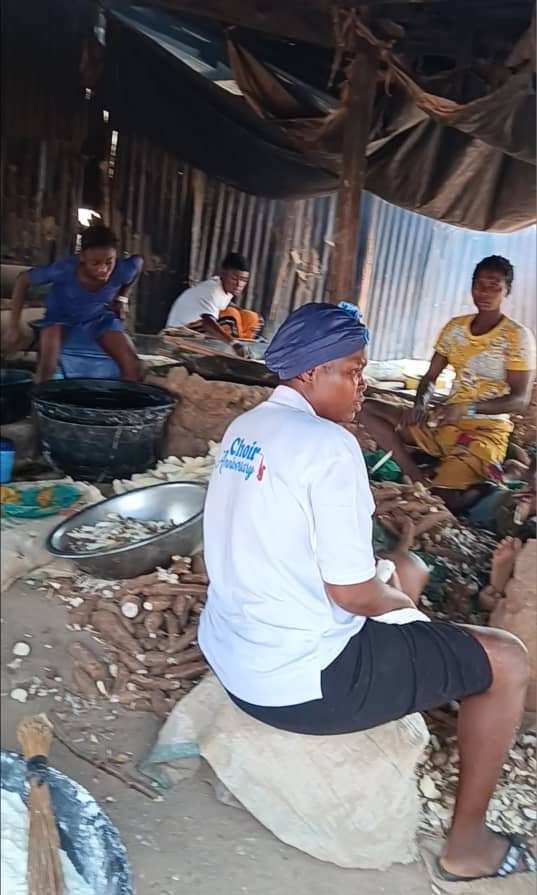
In many rural communities across Nigeria, the transformation from cassava to gari begins with the diligent efforts of women.
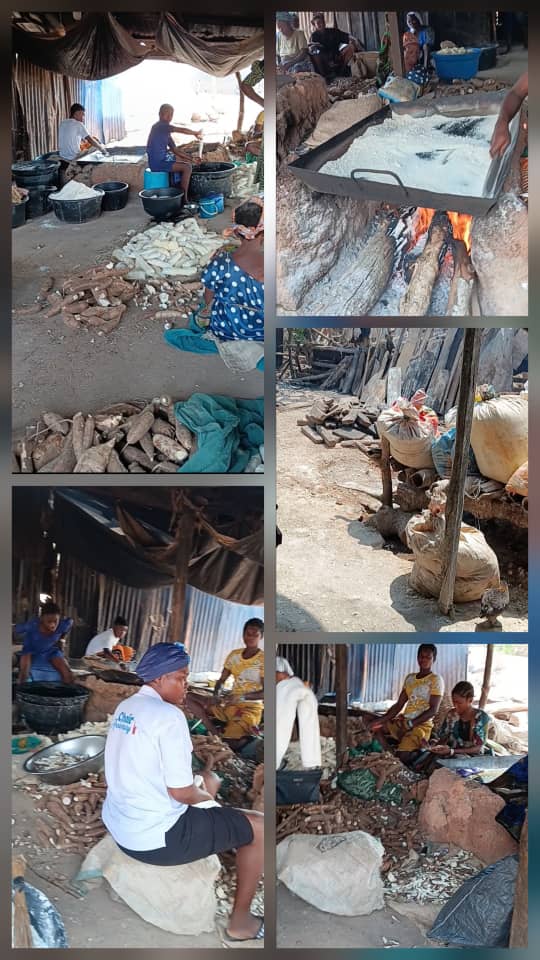
Recently, during a visit to a modest gari processing facility in Osun State conducted by the YEDIS team led by Rafiu Olaore on 13 March 2026, it was observed that women and young girls labour tirelessly to convert cassava into one of Nigeria’s most widely consumed staple foods.
Their activities include peeling the cassava, washing it, fermenting, pressing, and ultimately frying it over open firewood.
This process demands significant physical effort and consumes considerable time. Nevertheless, it is performed daily by rural women who have limited access to modern equipment, energy sources, financial services, and markets.
Despite these obstacles, these women constitute the fundamental support of our food systems. Their labour sustains millions of households and stimulates local economies.
Contemplate the potential impact if these women were granted access to advanced processing technologies, affordable financing options, clean energy solutions, and enhanced market linkages.
Investing in women engaged in agro-processing transcends agriculture itself; it involves creating decent employment opportunities, bolstering food security, alleviating poverty, and building resilient rural economies.
Government and development organisations such as the World Bank Group, the International Monetary Fund, the United Nations and the Food and Agriculture Organisation have a critical role in fostering inclusive agricultural transformation.
To establish sustainable, resilient food systems across Africa, it is imperative to invest in the women actively engaged in food production.
Empowering rural women leads to community empowerment, economic strengthening, and the securing of our food systems’ future.
The Youths Enterprise Development and Innovation Society seeks support from government agencies, international organisations, civil society, and the private sector to assist underserved smallholder women farmers and agricultural value-chain traders in marginalised communities.